Bee Smart: Solving Our School’s Buzzing Problem
Grade level: Elementary School
Initial ideas
How might learners use problem and solutions to help address the unwanted bees around the school?
Build projects and skills that matter.
The DEEDS Design Tool creates meaningful learning journeys rooted in relevant community topics, student voice, career skills and real-world problem-solving.
Real projects by real educators
Grade level: Elementary School
How might learners use problem and solutions to help address the unwanted bees around the school?

Grade level: 4th Grade
How can we make sure important stories from our neighborhood are remembered and shared?

Grade level: High School
i want to do a studio on fishing

Grade level: 2nd Grade
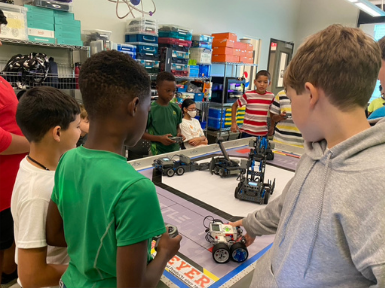
Design a project with ozobots

Grade level: 8th Grade
I want to make kids analyze aesop's fables and make them relate to modern world

Grade level: 7th Grade
Write an informative essay discussing what it takes for a character to overcome obstacles and achieve their goals.

Grade level: 11th Grade, 12th Grade, High School
Challenge Question: How can we create a practical tool that helps organizers draw on Black resistance traditions to navigate challenges in organizing today? Challenge: Organizers today must make difficult decisions about how to build trust, connect people across communities, protect participants, sustain momentum, respond to opposition, and turn collective action into lasting change. Black communities have confronted related challenges through maroon communities, abolitionist movements, the Underground Railroad, Black political organizing, self-emancipation, and other forms of collective resistance. Students will work with organizers to identify a real need and create a useful tool that translates lessons from these traditions without oversimplifying their distinct historical contexts. What Students Will Make and Do: Students will collaborate with organizers to design, test, and refine a practical organizing resource grounded in Black resistance history. Depending on the partner’s needs and students’ design decisions, the final product might be: An app or interactive website A strategy card deck A decision-making or reflection tool A facilitation guide or workshop A network-mapping toolkit A digital or print field guide Another accessible resource designed for a specific organizing need Students will: Interview or consult with organizers to identify a meaningful current challenge. Research historical examples of Black collective resistance and political organizing. Analyze the goals, strategies, networks, constraints, risks, and outcomes associated with each example. Identify strategic principles that may help organizers think through present-day dilemmas. Develop historically accurate case studies, strategy profiles, or planning prompts. Generate and evaluate multiple possible solutions before selecting a format. Create a prototype and test it with intended users. Gather feedback on its usefulness, clarity, accessibility, historical accuracy, and ethical design. Revise the resource and share or hand it off to the partner. The tool should help organizers examine possibilities and make informed decisions, rather than prescribe a single strategy or suggest that historical and contemporary conditions are interchangeable. Key Content: Unit 2B Topics and Themes Maroon communities and the creation of autonomous spaces Individual and collective resistance to enslavement Abolitionist movements, arguments, publications, and organizing strategies The Underground Railroad as a network of communication, movement, shelter, and collective risk Black political thought about freedom, citizenship, equality, abolition, and self-determination Organizing networks within and across Black communities The roles of speeches, newspapers, conventions, churches, relationships, and community institutions Black participation, resistance, and self-emancipation during the Civil War The relationship among Black collective action, the Civil War, and emancipation Juneteenth as a history of emancipation, delayed enforcement, memory, and continuing struggle Continuity and change in Black resistance strategies Skills: 1A, 1B, 1C, 2A, 2B, 2C, 3A, 3B, 3C Potential Partners: Grassroots Organizers Black Youth Project 100 (BYP100): byp100.org The Brotherhood Sister Sol (BroSis): brotherhood-sistersol.org Equality for Flatbush (E4F): equalityforflatbush.org Malcolm X Grassroots Movement (MXGM): freethelandmxgm.org Historical & Cultural Experts The Schomburg Center for Research in Black Culture: nypl.org/locations/schomburg Weeksville Heritage Center: weeksvillesociety.org Black Gotham Experience (BGX): blackgotham.com Civic Design & Tech Mentors The Center for Urban Pedagogy (CUP): welcometocup.org BetaNYC: beta.nyc

Grade level: 8th Grade
My students have strong opinions about school phone rules. I want to use that interest for a mock trial that connects student rights, evidence-based arguments, and public speaking. Teams could explore different perspectives and explain their decisions.
Powered by Inkwire's cutting-edge AI model, educators & learners can now create comprehensive project-based learning at the push of a button.
Rooted in YOUR community's context! Teaching and learning can focus on relevant issues and/or local or global business needs. Learning has never been more impactful.
DEEDS integrates standards and researched-backed practices into the learning journey for improved academic outcomes and enhanced professional skills.
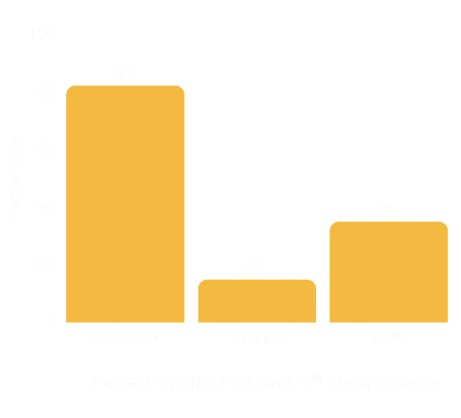
At LEAD 359, a K-8 Public School in Bronx, New York, students were more than twice as likely to meet grade-level standards.
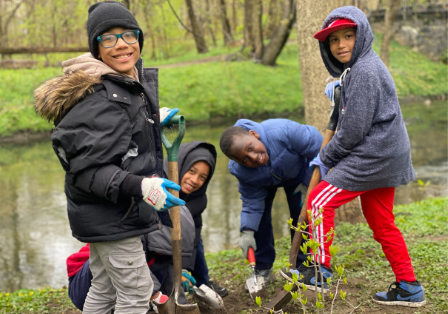
"Before, I didn't like science... but now, I want to be an ecologist when I grow up!"
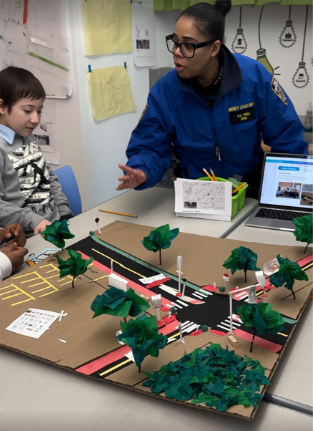
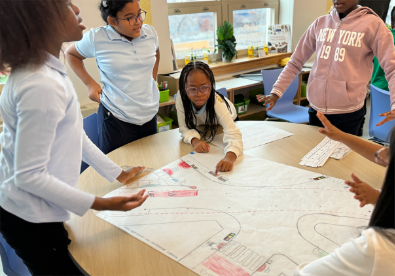
"I can't believe they are listening to my ideas. Like I can literally help make the intersection safer."
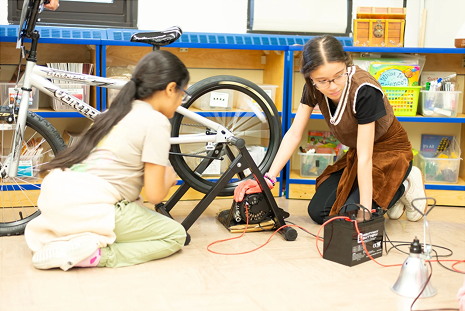
"It's not working, what do we do now?" "Let's try to make it better."